
Why CRO Is More Important Than SEO for Sustainable Business Growth
Search Engine Optimization (SEO) has long been considered the backbone of digital marketing. Rankings, impressions, clicks, and traffic often dominate marketing dashboards. But here’s a hard truth many businesses learn the expensive way: Traffic alone does not grow revenue. Conversions do. This is where Conversion Rate Optimization (CRO) becomes more important than an SEO – only approach. A website that attracts thousands of visitors but fails to convert them is not a growth asset – it’s a leaky bucket. In this blog, we’ll break down why CRO matters more than SEO, how both should work together, and why modern businesses must prioritize conversion-focused websites over traffic-focused ones. What Is CRO and How Is It Different from SEO? SEO: Bringing People In SEO focuses on: SEO answers the question:“How do we get people to our site?” CRO: Turning Visitors into Customers CRO focuses on: CRO answers the more critical question:“What happens after they arrive?” A business that invests only in SEO but ignores CRO is paying to attract users—then wasting them. Why CRO Is More Important Than SEO 1. Traffic Without Conversions Has Zero Business Value You don’t pay salaries, vendors, or rent with page views. If 10,000 people visit your site but only 10 convert, your problem is not traffic—it’s conversion efficiency. CRO improves outcomes without increasing traffic costs. Example: Less traffic. More revenue. 2. CRO Maximizes ROI from Every Marketing Channel SEO is just one acquisition channel. CRO improves performance across all channels, including: When conversion rates improve, every rupee spent on acquisition becomes more profitable. SEO brings users once. CRO makes every visit work harder. 3. CRO Is Revenue-Focused, SEO Is Traffic-Focused SEO success metrics often include: CRO success metrics include: Business leaders care about revenue – not keyword positions. CRO directly aligns marketing performance with business goals. 4. CRO Fixes User Experience Problems SEO Can’t SEO can bring users to your website, but it cannot fix: CRO identifies where users hesitate, drop off, or abandon – and fixes those friction points. Google may send traffic. Users decide whether to trust you. 5. CRO Reduces Dependency on Constant Traffic Growth SEO is competitive, time-consuming, and unpredictable: CRO creates compounding returns. Once your funnel is optimized, every visitor becomes more valuable – even if traffic stays flat. This makes CRO especially critical for: 6. CRO Improves Lead Quality, Not Just Quantity More traffic often means lower-intent users. CRO helps: This leads to: SEO brings volume. CRO brings relevance. 7. CRO Is Faster to Impact Than SEO SEO is a long-term play. CRO delivers faster wins. For businesses under revenue pressure, CRO is often the quickest lever for growth. SEO vs CRO: The Real Answer Is Priority, Not Choice This is not an SEO vs CRO battle. The real issue is what comes first. The Right Order: Driving traffic to a poorly converting site is inefficient. Optimizing conversions before scaling traffic is smart growth. Signs Your Website Needs CRO More Than SEO You should prioritize CRO if: In these cases, more traffic will only amplify losses. How CRO and SEO Work Best Together When combined strategically: CRO doesn’t replace SEO – it multiplies its impact. Final Thoughts: Traffic Is Vanity. Conversions Are Sanity. SEO gets attention. CRO gets results. A high-ranking website that doesn’t convert is not successful – it’s underperforming. Businesses that prioritize CRO build sustainable, profitable growth by focusing on what truly matters: turning visitors into customers. Before asking: “How do we get more traffic?” Read our Real Examples Ask: “Are we making the most of the traffic we already have?” That question separates growing businesses from struggling ones.
Optimize Google Ads Campaigns: Stop Search, PMax & Demand Gen from Competing with Each Other
In a Google Ads account running multiple campaign types like Search, Performance Max (PMax), and Demand Gen, cross-campaign cannibalisation happens when these campaigns compete for the same users, search queries, or placements. This internal overlap leads to wasted ad spend, inflated CPCs, and difficulty in optimising performance. For example, PMax might start capturing branded search traffic meant for your Search campaigns, or Demand Gen might overlap with Display or remarketing efforts, causing attribution confusion and budget inefficiency. This blog post breaks down how cross-cannibalisation affects your overall ad strategy and provides actionable solutions to restructure your campaigns for better performance, cleaner data, and higher ROAS. Cross-cannibalisation in a Google Ads account occurs when multiple campaigns (like Search, Performance Max, Demand Gen, etc.) compete for the same or similar audience/search queries, leading to inefficiencies in performance, inflated costs, and difficulty in attributing performance accurately. Let’s break this down and then cover solutions. How Cross-Cannibalisation Happens by Campaign Type Campaign Type How It Can Cause Cannibalisation Search Targets specific keywords; can compete with PMax for the same queries. Performance Max (PMax) Uses automation to serve across all networks (Search, Display, YouTube, etc.) and can “steal” traffic from Search, Shopping, or Brand campaigns. Demand Gen Focuses on YouTube, Discover, and Gmail but can overlap with Display and PMax audience targeting. Display May target similar audience segments as Demand Gen or PMax. Video (YouTube) Can overlap with PMax and Demand Gen in placements and audiences. Common Symptoms of Cannibalisation Brand campaign impressions drop after launching PMax. CPCs or CPAs increase without clear attribution. Demand Gen campaigns deliver similar audience interactions as PMax. Search campaigns lose impression share even with high bids. Shopping campaigns underperform due to PMax taking over Shopping inventory. Solutions to Avoid/Minimise Cross-Cannibalisation 1. Prioritise with Campaign Structure & Exclusions Strategy Description Use exact match in Search for high-intent queries Prevents PMax from stealing traffic intended for Search campaigns. Exclude branded terms from PMax Add your branded keywords as negative keywords via a Google rep or by segmenting campaigns. Segment PMax by goals (prospecting vs. conversion-focused) Create multiple PMax campaigns with different audience signals and conversion goals to avoid overlap. Use placement exclusions In Demand Gen or PMax, exclude placements or topics that other campaigns target (e.g., YouTube placements if you’re running Video separately). 2. Audience & Asset Differentiation Demand Gen vs PMax: Utilise custom segments and distinct creatives to target unique user journeys. Create audience exclusions across campaigns to control exposure — for example, exclude converters or website visitors in Demand Gen if Search/PMax is retargeting them. In remarketing, split lists into warm, hot, and cold to assign to different campaign types. 3. Use Campaign Priority Settings For Shopping: Set campaign priorities (low, medium, high) between Standard Shopping and PMax (if still using Standard). For Search campaigns, use bid adjustments and negative keywords to assert more control. 4. Labelling & Monitoring Label campaigns by funnel stage (Top, Mid, Bottom) and regularly monitor overlap in audience and performance. Use Google Ads Insights & Reports, including Search Term Insights, Asset Group Reporting in PMax, and Audience Overlap reports (in GA4) to detect duplication. 5. Granular Asset Grouping in PMax Create one asset group per product category/audience, rather than dumping everything into one PMax campaign. This gives better visibility and control, reducing cannibalization within the same campaign. 6. Geo or Time-Based Splitting Run campaigns targeting different regions or time slots if they’re meant to serve the same audience. For example, PMax during off-hours, Search during peak hours. Example Use Case & Solution Problem: You’re running a branded Search campaign, and after launching PMax, Search impressions and conversions drop. Solution: Request Google Rep to exclude branded terms from PMax. Use exact match in the branded Search campaign. Analyse search term overlap using Search Term Insights in PMax. Separate brand and non-brand PMax campaigns if needed. Summary Table Campaign Tips to Prevent Cannibalisation Search Use exact match; add negatives to PMax PMax Segment by goal, exclude branded traffic, and control asset groups Demand Gen Different audiences, exclude converters, unique creative hooks Shopping Use campaign priority settings; monitor with Search Term Insights Video/Display Use exclusions and frequency caps; segment audiences distinctly Cross-campaign cannibalisation can silently drain your ad budget and hurt results if left unmanaged. Whether you’re scaling an e-commerce store or an EdTech brand, the key lies in strategic audience segmentation, keyword control, and clear campaign intent. Want to see how this works in practice? Check out our Google Ads case study where we resolved major cannibalisation issues across Search, PMax, and Demand Gen for an EdTech company, leading to a 40% boost in branded traffic and a 28% drop in CPA.
Potential Causes and Solutions for Audience Targeting Issues in Google Ads
When working with Google Ads, selecting the right audience is key to maximizing campaign performance. However, you may encounter errors or performance issues if your audience targeting settings are not configured properly. This guide addresses some of the most common causes and solutions to help you optimize your audience targeting. 1. Audience Targeting vs. Observation What it Means: You may have mistakenly set your audience targeting to Observation instead of Targeting, or vice versa. These two settings have different purposes: Solution: 2. Audience Type Misalignment What it Means: You may have selected incompatible audience types within the same campaign. For example: Solution: 3. Campaign Type Incompatibility What it Means: Some audience types may not be compatible with certain campaign types. For example, In-Market audiences might perform better in Search campaigns, while Affinity audiences work better in Display campaigns. Solution: 4. Layering Audiences Incorrectly What it Means: Layering multiple audience segments too aggressively can reduce your reach or contradict your campaign goals. For example, combining Custom Segments with Affinity Audiences may narrow your audience too much and limit exposure. Solution: 5. Geographic or Demographic Restrictions What it Means: Geographic or demographic restrictions may conflict with your audience selection. For example: Solution: 6. Audience Size is Too Narrow What it Means: The selected audience may be too small, especially when combined with overly restrictive settings. This can cause your ad to be shown to very few people, impacting your overall performance. Solution: How to Fix It: 1. Review Campaign Settings: 2. Simplify Audience Targeting: 3. Check for Exclusions: 4. Validate Campaign Type Compatibility: Conclusion When setting up audience targeting in Google Ads, it’s crucial to choose audience segments that align with your campaign type and goals. Misalignment in audience selection, improper layering, and overly narrow targeting can limit your campaign’s reach and performance. By following the solutions outlined in this guide, you can improve targeting efficiency, increase ad relevance, and drive better results for your campaign.
Fixing ‘Audience Selection Does Not Match with Audience Targeting’ in Google Ads: A Comprehensive Guide
The compatibility between Google Ads campaign types and various audience segments. This should make the concept of “Audience selection does not match with audience targeting” easier to understand: Campaign Type Supported Audience Segments Notes Search Campaigns In-Market Audiences- Custom Segments (based on keywords and URLs)- Remarketing Lists- Customer Match Search campaigns use keywords as the primary targeting method. Audiences layer on top to refine targeting but won’t replace keyword-based ads.- Best for Intent-based targeting. Display Campaigns In-Market AudiencesAffinity AudiencesCustom Segments (keywords, apps, or URLs)Remarketing Lists Ideal for broad brand awareness. Audience selection is crucial as it replaces keyword targeting. Performance Max In-Market AudiencesAffinity AudiencesCustom SegmentsRemarketing ListsCustomer Match Automatically uses audience signals to guide machine learning. Doesn’t strictly limit to selected audiences. Video Campaigns (YouTube) In-Market AudiencesAffinity AudiencesCustom SegmentsRemarketing ListsDemographics Works well for targeting interest-based or behavior-based segments. Best for storytelling and engagement. Shopping Campaigns Remarketing ListsCustomer Match Shopping ads rely on product feeds. Limited audience use (mainly for remarketing or customer match). Discovery Campaigns In-Market AudiencesAffinity AudiencesCustom SegmentsRemarketing Lists Best for discovery-focused content. Audience targeting replaces any keyword intent. App Campaigns No manual audience targeting (uses Google’s AI for automated targeting) Audiences aren’t directly selectable, as Google optimizes ads for installs or engagement goals. Key Highlights: Search Campaigns: Audiences are used to refine targeting but require keywords to trigger ads. Example: If you select In-Market Audiences for “Healthcare Services,” only users searching relevant keywords and in that audience will see your ads. Display Campaigns: Audience targeting is the primary focus, as there are no keywords. Example: Use Affinity Audiences like “Health Enthusiasts” for brand awareness or Custom Segments based on competitor websites for niche targeting. Performance Max: Uses audience signals to guide AI, but ads are shown to users beyond the selected audiences. Example: Add Custom Segments with keywords like “urgent care near me” as signals to optimize performance. Video Campaigns: Best for Affinity (broad interests) or In-Market Audiences (active shoppers). Example: Use Affinity Audiences for fitness products or Custom Segments for viewers who searched specific health-related topics. Shopping Campaigns: Google Ads Audience targeting is limited to Remarketing or Customer Match. Example: Show ads to users who previously viewed products on your website (remarketing). App Campaigns: Google Ads handles targeting automatically based on app install or engagement goals. How This Relates to “Mismatch” Errors: If you’re using Search Campaigns but select broad Affinity Audiences, Google Ads may flag this as a mismatch since Search focuses on intent-based targeting (keywords + in-market/custom audiences). Similarly, using unsupported audience segments (like Affinity for Shopping Campaigns) will trigger errors.
OFF Page SEO Services for Website Ranking
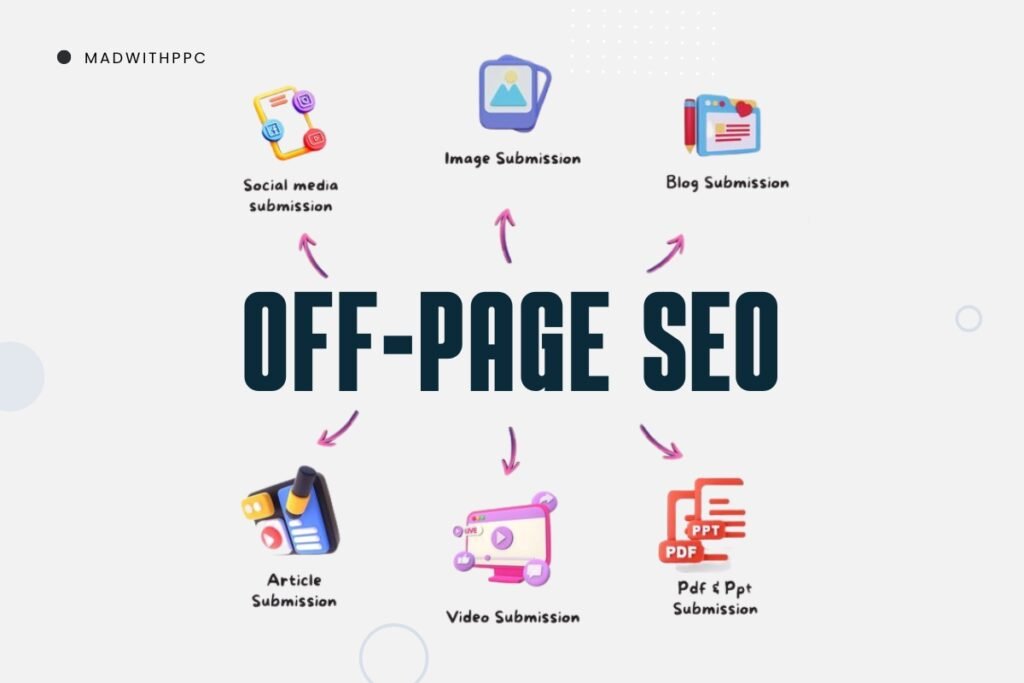
According to the study, off-page SEO-related factors could potentially carry a ranking factor weight of more than 50%. You might have heard of the term off-page SEO before, but do you know what it really means? Like all SEO, it’s a set of techniques marketers implement to drive more users to a website, increasing its rank on the search engine results page. Unlike on-page SEO, which is carried out within the website, off-page SEO includes everything that’s implemented outside of the website. There are four off-page SEO factors that you need to consider: site traffic, relevance, domain authority, and link type. First, we need to talk about site traffic. The entire purpose of implementing an off-page SEO strategy is to bring more organic search traffic to your website. So when you’re planning your off-page SEO strategy, it’s essential to evaluate how much traffic a particular activity can potentially bring to your website. Backlinking still lies at the centre of off-page SEO. Search engines use these links to determine the quality of a website’s content. So, if your website has a significant number of high-value backlinks, it will most likely outrank competitors. However, some of these tactics can be considered black-hat SEO. So please refrain from overdoing them. Second, we need to look at domain authority. This is the score that depicts the performance of a website. Basically, if a website is performing well, Google will value their opinion higher and trust the websites that they link to. When performing off-page activities, you’ll need to know the quality of the website you’re planning to use. If your website has a lower domain authority and you place your backlink on a website with a higher domain authority, they can essentially pass some of that authority to you and allow you to rank higher. The third thing you need to consider is relevance. You always need to optimise your content for the end user. The days of keyword stuffing are outdated. Additionally, you need to keep the promotional content to a minimum and include more valuable content. Make sure to do proper research before writing and collect valuable data that you can integrate into your content where possible. For instance, if your business deals with makeup products and you choose a host website with a high domain authority but they talk about technology, it’s definitely not going to work for you. So make sure you’re looking for links that actually relate to your company. And finally, the fourth factor to consider is link type. When considering off-page SEO activity, you need to decide which type of link you should use. These can be broken down into do-follow and no-follow links. A “Do-follow” link is an inbound link type that enables Google bots to pass link values, sometimes called “link juice,” from one website to another. If you want to receive the best boost from a do-follow link, it’s recommended that the blog post use a relevant keyword as the anchor text to link to the target website. You should encourage other sites to diversify the anchor text that they use when linking. Try to get them to use a variety of keyword phrases so they won’t be seen as inorganic by Google. Having the same anchor text for all of your posts will indicate that the links may be inorganic or manipulative, and this can lead to penalties. Google keeps track of the number of do-follow links that go to your website and the number of different domains you receive these links from. More do-follow links from more relevant domains will provide you with more link juice and give you a higher ranking in search engine results. And the “No-Follow” link, on the other hand, does not allow the Google bots to follow them, so they don’t offer any link juice or value to the page that’s being linked. Because of this, no-follow links won’t have any impact on the rankings of the linked website. You probably shouldn’t go seeking this type out, but they can still drive organic traffic to your website by people clicking on them, so there’s no need to get angry if they do happen organically. Now that we know the four main elements to consider in your off-page SEO strategy, it might be worth taking a step back and considering why off-page SEO is important. Basically, Google gets to know more about the level of traffic to your website and where that traffic is coming from. From Off-page SEO than anything, you could do. There are endless reasons to implement an off-page strategy.
On Page SEO – What it is? What are the factors affecting it?
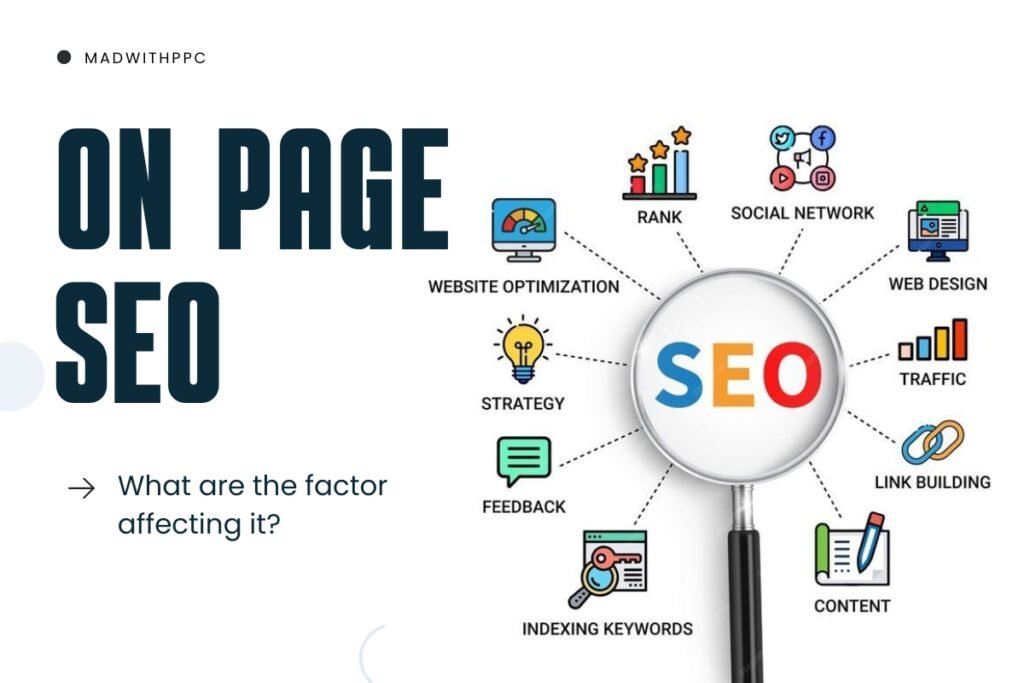
Every Search Engine have their own algorithms that tells you “How they crawl your website?” and what are the things you should be doing and you should not be doing and then we’ve got to know that everyone is learning by experimentation but there are some core areas in it. First of all, On Page Optimization is nothing but right words on the page in the right place. The right words are those words that people are searching for and the right place is basically now THE PAGE TITLE, THE URL, THE HEADING. Search engine algorithm always tries to find best answer for its user. Crawler picks most sensational content first by picking with few basics like Link Building, Social Signals, User Behavior, and Core web vitals. If we want to get into the core areas, we should first look at some basic factors that really affecting On Page Optimization step by step. Link Building You should work for why other websites link to yours? You would rather have interesting entertaining or informative, whatever it might be you need to create a content that is worth bothering to link through to your website. Once it’s done those links need to come from trusted websites, we can use numerous tools that allow us to look at its domain authority. If you get links from high domain authority websites it improves your domain authority and its basically going to make your website better with trust factor. Keywords / Social Signals It is about what people talking really about your stuff. Most of the websites don’t cover all of these basics that are the thing it’s not guaranteed to rank. It’s going to get a little bit harder. But, in my experience forcing your content with lot of keyword, I call them keyword Flushing. Landscaping your keywords in your content with a per hook that starts from your title and URL is the only right thing to rise above and that’s the key for On Page Optimization. There are thousands of known SEO factors and numbers of unknown. But as long as you’re doing a little bit more than your competitors in your business then you get the opportunity and that’s the time to shine. So the thing is that everyone will argue, “No there’s this factor and there’s that factor” and the algorithms is this and that. It really doesn’t even matter; because if you get these fundamentals right and your content is exceptional it’s going to stand out. User Behavior When someone clicks on your result in the web page from search engine result do they stay on that page for a period of time and engage the content or do they bounce back to the search engine? “Bouncing Back” that’s a negative signal. Staying on the page dwell time is a positive signal. Chrome is telling Google how your user engaging with content so therefore it means that we want to make sure that people are really enjoying your content. Core Web Vitals When it comes to core web vitals and actually core web vitals are technical all about algorithm but it’s actually related to user experience again. So, it’s all about how quickly does your page load it needs to load quicker than 4 seconds in a desktop. You can look these metrics in Google search console you’ll be able to see how you’re doing against these metrics. Does it load quickly? It’s called cumulative layout shift and you don’t want when someone goes through the web page to click on something and it suddenly jumps slightly and that can create all sorts of problems. We can see some examples of websites since they launched that their organic traffic has dropped quite significantly it’s a core signal. The last important factor is “How quickly your audience interacts?” that’s basically when you go to a web page and it loads; you may click on the menu to get the page you want really quickly. That should happen in less than 100 milliseconds. You need to look at how Google thinks, they are in hurry! Yeah right, this website is slow. These are the core signals and if you get these fundamentals right and your content is exceptional then you will rank better. So, go through and look at those things that are really going to make a difference.
#10 Latest Digital Marketing Trends 2025
Digital marketing is rapidly evolving as new technologies and consumer behaviours emerge. To remain competitive, businesses must be proactive and adopt the latest trends. In 2024, digital marketing is shifting towards personalization, data privacy, and engaging content formats. Based on insights from the HubSpot Marketing Trends report and other industry data, here are the top trends every marketer should be aware of. 1. AI-Powered Marketing and Personalization Artificial Intelligence (AI) continues to be one of the most transformative forces in digital marketing. In 2024, over 80% of marketers are expected to use AI to support and enhance their marketing campaigns, particularly in terms of personalization and automation. According to a recent survey, 49% of marketers reported that AI tools have improved their campaign performance by providing deeper customer insights. AI’s influence is evident in the form of: Chatbots: AI-powered chatbots have become an integral part of customer service, and it’s estimated that 47% of consumers are comfortable purchasing items through a chatbot. AI chatbots not only provide 24/7 customer support but also guide users through the buyer’s journey. Personalization at Scale: Marketers are increasingly using AI for personalization. An estimated 91% of consumers are more likely to shop with brands that offer relevant recommendations. AI algorithms analyze customer data to create hyper-personalized content, boosting engagement and conversions. 2. 7 Seconds Rule: Video content continues to be a key component of digital marketing, and short-form videos are leading the charge. Platforms like TikTok, Instagram Reels, and YouTube Shorts have experienced explosive growth. 88% of marketers report that short-form videos offer high ROI, and it’s projected that by the end of 2024, short-form video content will account for 82% of all internet traffic. The reason for the popularity of short-form content lies in its ability to: Capture Attention Quickly: With the average attention span of users now down to just 7 seconds, marketers must convey their message in a concise yet impactful way. Short-form videos that deliver immediate value or entertainment are more likely to be shared, extending their reach. Enhanced Algorithmic Reach: Algorithms on platforms like TikTok prioritize engagement, and videos that receive high initial interaction get boosted to more viewers, creating a snowball effect for brand visibility. 3. Voice Search and Conversational Marketing Voice search is becoming increasingly prevalent, thanks to the popularity of smart speakers such as Amazon Echo and Google Home. 71% of consumers prefer to search their queries via voice rather than typing, especially for on-the-go searches. As a result, optimizing content for voice search has become a priority for marketers. Conversational marketing through chatbots and messaging apps is also on the rise. A study found that 82% of consumers expect an immediate response from brands when they have questions, and chatbots are filling that gap effectively. Conversational marketing offers benefits such as: Real-Time Engagement: Customers don’t have to wait for responses. Instant, automated replies lead to increased satisfaction and a greater likelihood of conversions. Lower Customer Support Costs: By handling up to 80% of routine inquiries, chatbots reduce the burden on customer service representatives, allowing them to focus on more complex issues. 4. The Shift to First-Party Data Collection As privacy regulations become more stringent and third-party cookies are phased out, the emphasis on first-party data is growing. 68% of digital marketers state that data collection of first-party is crucial for maintaining personalized and targeted digital marketing efforts. Brands are shifting to new strategies to collect data directly from their audience, such as: 5. Influencer Marketing Influencer marketing remains a powerful tool, but the trend is moving away from celebrity influencers towards micro (1,000-10,000 followers) and nano influencers (less than 1,000 followers). 93% of marketers who used influencer marketing in 2023 stated they will continue to use it in 2024, with 61% planning to increase their budgets. Why the shift towards smaller influencers? Higher Engagement Rates: Nano and micro-influencers often have engagement rates up to 7 times higher than larger influencers because their followers trust their opinions more deeply. Niche Market Targeting: These influencers allow brands to connect with a specific audience segment effectively and at a lower cost, achieving a higher ROI. 6. Social Commerce: Blurring the Lines between Shopping and Socializing Social commerce, or the direct purchase of products via social media platforms, is growing. By the end of 2024, social commerce sales are expected to reach $1.3 trillion, according to eMarketer. Platforms like Instagram, TikTok, and Facebook have enhanced their shopping features, allowing users to make purchases without leaving the app. 7. User-Generated Content (UGC) for Authentic Engagement User-generated content is crucial for building trust. 79% of people say UGC highly impacts their purchasing decisions because it feels more authentic than direct brand messaging. Businesses that integrate UGC into their marketing strategies see higher engagement rates—on average, UGC-driven ads have 4 times higher click-through rates compared to traditional ads. Encouraging your customers to share photos, videos, or reviews of your products not only promotes your brand but also enhances community engagement. Brands like GoPro and Starbucks have successfully utilized UGC campaigns to engage customers and build loyalty. 8. Consistency and Social Responsibility as Marketing Essentials More than ever, consumers are supporting brands that align with their values. 60% of Gen Z and 50% of Millennials prefer to buy from brands that take a stand on social and environmental issues. Sustainability and social responsibility have become marketing differentiators in 2024. Brands that highlight their eco-friendly initiatives and social responsibility efforts: Boost Trust: Transparency in sustainability efforts builds consumer trust. Enhance Loyalty: 52% of consumers say they are more likely to remain loyal to a brand that shares their values. For example, Patagonia’s “Don’t Buy This Jacket” campaign successfully communicated its stance on reducing consumption and advocating for sustainability, leading to a significant increase in sales while aligning with their brand mission. 9. Augmented Reality (AR) for Product Visualization AR has emerged as a powerful tool, especially in industries like fashion, beauty, and home decor. In 2024, 74% of consumers expect brands to
Why You Shouldn’t Buy Instagram Followers and What You Should Do Instead.
Are You Tempted to Buy Instagram Followers? Here’s Why You Shouldn’t! In the world of social media, growing a large following on Instagram can seem like a golden ticket to success. More followers mean more exposure, credibility, and potential sales, right? Not always. The temptation to “fast track” this process by purchasing followers is real, especially for brands and influencers trying to gain momentum. But buying Instagram followers, while seemingly harmless, can have detrimental consequences that impact your account and overall business in the long run. Sure, purchased followers may inflate your numbers, but at what cost? These followers aren’t real, and they’re certainly not interested in engaging with your content. Here’s why buying Instagram followers is a quick fix that brings more harm than good—and why focusing on organic growth is the only sustainable way to success. Why Buying Instagram Followers is a bad idea? While buying followers might boost your numbers overnight, the long-term drawbacks far outweigh the short-term gains. Instagram is a platform built on engagement—likes, comments, shares, and saves. Fake followers, which are often bots or inactive accounts, won’t interact with your posts, leaving you with a bloated follower count but little to no engagement. Low Engagement Rate: Instagram’s algorithm prioritizes content that gets engagement. When your posts receive low engagement relative to your follower count, the algorithm flags it, limiting your reach even further. Your content is shown to fewer real users, leading to decreased visibility. Damaged Credibility: Savvy users can easily spot fake accounts. This damages your brand’s credibility because people can tell when a large following doesn’t match up with low interaction. Losing trust with your audience is hard to bounce back from. No Conversions: Ultimately, fake followers don’t convert into real sales or loyal customers. They’re just a number, and without authentic interactions, your brand misses out on genuine leads and opportunities for growth Real Consequences when you Buy Instagram Followers? Instagram’s algorithm is designed to show users content they’ll actually enjoy and engage with. Engagement metrics such as likes, comments, shares, and saves play a critical role in determining which posts get seen. When you buy followers, you’re inflating your numbers with accounts that don’t care about your content, resulting in low engagement. Here are some of the direct consequences of buying followers: Algorithmic Downgrade: Instagram actively tracks engagement. When your engagement rate drops (because your fake followers aren’t interacting), your content gets shown to fewer people, including your real followers. In the long run, this can seriously hinder your growth. Account Suspension: Instagram has strict rules about fake accounts and followers. Accounts found purchasing followers can be penalized with suspensions, shadow bans, or even account deletions. Instagram regularly purges fake accounts, so even if you buy followers, there’s no guarantee they’ll stick around. Wasted Money: You might think buying followers is a quick and cheap solution, but you’re essentially paying for a number that provides no value. The money spent on fake followers could be better invested in authentic growth strategies like influencer collaborations or paid ads that attract real, interested followers. Why Organic Growth Always Wins? Organic growth may take longer, but it’s the only path that guarantees sustainable success on Instagram. When you grow your audience organically, you’re attracting real people who are genuinely interested in your brand. These followers are more likely to engage with your content, become loyal supporters, and even turn into paying customers. Here’s why organic followers always outshine fake ones: Higher Engagement Rates: Organic followers follow you because they’re interested in what you have to offer. They engage with your posts, share your content, and help expand your reach to their networks. Trust and Credibility: When people see a brand with a strong, authentic following, they’re more likely to trust it. Organic followers become brand advocates, spreading positive word-of-mouth and strengthening your reputation. Better for Business: Instagram isn’t just about looking popular—it’s about building relationships and converting followers into customers. Organic followers are more likely to convert into sales, helping you meet your business goals. How to Build Your Audience Organically (Without Breaking the Rules) Instead of buying followers, focus on proven strategies that attract real, engaged users. Effective Strategies for organic Instagram Growth: Post High-Quality Content Consistently: Your content is the backbone of your Instagram presence. High-quality photos, engaging captions, and well-thought-out visuals will capture your audience’s attention and keep them coming back. Use Hashtags Strategically: Hashtags are a powerful tool for reaching a broader audience. Research relevant hashtags within your niche and use a combination of popular and niche-specific tags to reach potential followers. Engage With Your Followers: Building a community on Instagram requires effort. Respond to comments, ask questions, and engage with your followers. Show them that you value their input and build relationships. Leverage Instagram Stories & Reels: Instagram’s Stories and Reels features offer fantastic opportunities for increased visibility. Use these tools to share behind-the-scenes content, showcase your brand’s personality, or run interactive polls and Q&As. Collaborate with Influencers and Brands: Collaborating with influencers and other brands in your niche exposes you to a larger, relevant audience. Look for genuine partnerships that align with your brand’s message and values. Don’t Just Grow Followers—Build a Community On Instagram, it’s not just about accumulating followers—it’s about building a community. A highly engaged, loyal following will do more for your brand than any number of fake followers ever could. Real, engaged followers interact with your content, recommend your brand, and contribute to long-term success. Here are a few tips to foster a vibrant Instagram community: Host Giveaways and Contests: Encourage engagement by hosting contests where followers need to comment, like, and share your post to win. This not only drives engagement but also helps increase your reach. Ask Questions in Your Captions: Prompt conversations by asking open-ended questions in your captions. This encourages followers to engage with your posts and increases your visibility. Share User-Generated Content: Showcase your followers by sharing user-generated content. This builds trust and a sense of community, as your audience feels valued and included. Conclusion:
Do SEO & SEM Work Together in 2024?
Here’s How They Complement Each Other for Maximum Impact. In the competitive world of digital marketing, driving online visibility and traffic is the ultimate goal. Two major tools at a marketer’s disposal are SEO (Search Engine Optimization) and SEM (Search Engine Marketing). While SEO focuses on organic rankings and SEM covers paid strategies, integrating these two approaches can have a powerful, compounded effect. For businesses in 2024, understanding how SEO and SEM work together is essential to maximizing digital presence and growing customer engagement. Understanding the Difference Between SEO and SEM To effectively combine SEO and SEM, it’s essential to understand their differences: SEO (Search Engine Optimization): SEO is the practice of improving a website’s organic rankings on search engines like Google. Key strategies include keyword optimization, content creation, website speed improvements, and building high-quality backlinks. SEO is a long-term investment that gradually brings consistent traffic, helping a site gain credibility over time. SEM (Search Engine Marketing): SEM focuses on paid advertising, such as pay-per-click (PPC) ads, to secure top positions on search engine results pages (SERPs). It’s a quick approach to reach users actively searching for relevant keywords and can deliver instant visibility. SEM is particularly valuable for targeting time-sensitive campaigns or specific audience segments. Why Combining SEO and SEM is Essential in 2024 Combining SEO and SEM has proven advantages for digital marketers and businesses. The complementary nature of these two strategies has become even more relevant in 2024, as new technologies, search algorithms, and user expectations shape online behaviour. Broader Search Engine Presence Combining SEO and SEM strategies increases the likelihood that your brand appears prominently on both organic and paid sections of SERPs. For competitive keywords, where it’s difficult to achieve a top organic position, SEM helps you secure visibility while working on your SEO performance. Having both a paid ad and organic listing can significantly increase click-through rates (CTR), as users encounter your brand multiple times on the page. Real-Time Data to Refine SEO SEM campaigns provide quick, detailed feedback on how keywords perform. By observing which terms yield high clicks and conversions, marketers can use this data to guide their SEO content strategies. For example, if SEM reveals that “affordable eco-friendly clothing” converts well, you can integrate this phrase into your SEO content, blogs, and landing pages. Strengthening User Journey across Multiple Touchpoints SEO and SEM together create a cohesive user journey that addresses the audience at different stages of the buying process. SEM captures immediate leads, attracting users with specific intent, while SEO helps build trust and keep audiences engaged with valuable content. This multi-stage approach increases the likelihood of conversions, as users are more likely to recognize and trust a brand they see repeatedly. SEO and SEM trends in 2024 Keeping up with trends is critical for both SEO and SEM success. Here’s how recent advancements and user expectations impact the integration of SEO and SEM: AI-Driven Search Algorithms and Intent Targeting With Google’s AI-powered algorithms like BERT and MUM, the search engine is now better at understanding context and user intent. SEM campaigns that use intent-driven keywords will have a greater impact, as ads are more likely to resonate with user needs. Simultaneously, SEO content optimized for search intent (such as “how-to” guides or long-form articles) aligns with Google’s AI-driven updates, improving organic reach. Mobile-First and Core Web Vitals Optimization Mobile-first indexing means both SEO and SEM must prioritize mobile experiences. Websites should be optimized for fast loading, especially as Core Web Vitals have become a ranking factor. SEM campaigns optimized for mobile can increase ad engagement, while mobile-friendly SEO practices keep users engaged once they land on the site. Prioritizing UX in Both SEO and SEM User experience (UX) has gained immense importance in SEO rankings. SEM campaigns benefit too, as a well-optimized landing page leads to higher conversion rates. Enhancing UX, such as improving page speed, visual stability, and easy navigation, boosts both organic and paid performance. Seamless user experience also increases user retention and trust, enhancing the value of each campaign. How SEO and SEM work together for better Results Use SEM Insights to Guide SEO Content With the quick data feedback from SEM, you can identify high-performing keywords and phrases that draw attention. By adding these terms to your SEO strategy, you’re targeting topics proven to resonate with your audience. For instance, if SEM ads for “best vegan skincare products” gets more conversion, optimizing blog content around this term can drive more organic traffic. Retarget SEM Visitors with SEO Content SEM can introduce users to your brand, while SEO helps to deepen engagement. Retargeting users who clicked on SEM ads by guiding them to SEO-rich blog posts or guides increases conversion potential, as it keeps audiences interacting with your brand. SEO-Optimized Landing Pages for Enhanced SEM Performance Landing pages for SEM ads optimized with SEO techniques ensure that users who click on paid ads find content that meets their expectations. A smooth, keyword-aligned experience from ad to landing page can reduce bounce rates, enhance conversions, and benefit both organic and paid performance. Best Practices for Aligning SEO and SEM in 2024 Consistent Keyword Strategy Across Both SEO and SEM Using a consistent keyword strategy across both organic and paid efforts ensures brand cohesion. High-ranking, low-competition keywords are particularly useful, as they drive quality traffic without overspending on ad budgets or SEO resources. Creating SEO and SEM Content Themes Aligning content themes across SEO and SEM campaigns establishes a unified brand message across all search engine touchpoints. This tactic strengthens brand identity and improves reach across multiple channels. Tracking SEO & SEM Metrics Together for a Unified Strategy Utilize analytics tools like Google Analytics and SEMrush to measure SEO and SEM data side-by-side. Understanding the combined performance of your SEO and SEM efforts will help refine strategies, pinpoint high-performing keywords, and optimize ROI. Why SEO and SEM Together are Essential for Success in 2024 In 2024, the synergy between SEO and SEM is undeniable. Leveraging both organic